Yes, a pop-up showroom on a ship works well when brand experience and impact are paramount and the logistics are feasible. Think of a product launch with a select guest list, a roadshow through multiple cities, or a VIP experience around a new collection. If you have doubts about capacity, accessibility, or permits, please first read the checklist in this article before booking a ship with a provider like Eivissa-events, Multinotes Showcase, or an organizer of the Tall Ships Races.
In short:
- A pop-up showroom on a ship is especially suitable for small to medium-sized events such as product launches or VIP experiences, provided the capacity is not too large.
- Planning should start with a clear concept and KPIs, and bookings are made at least eight to twelve weeks before the date, with a preparation time of three to four months for custom projects.
- Authorizations, proper berths and safety measures require timely coordination with port masters, the municipality and ship owners.
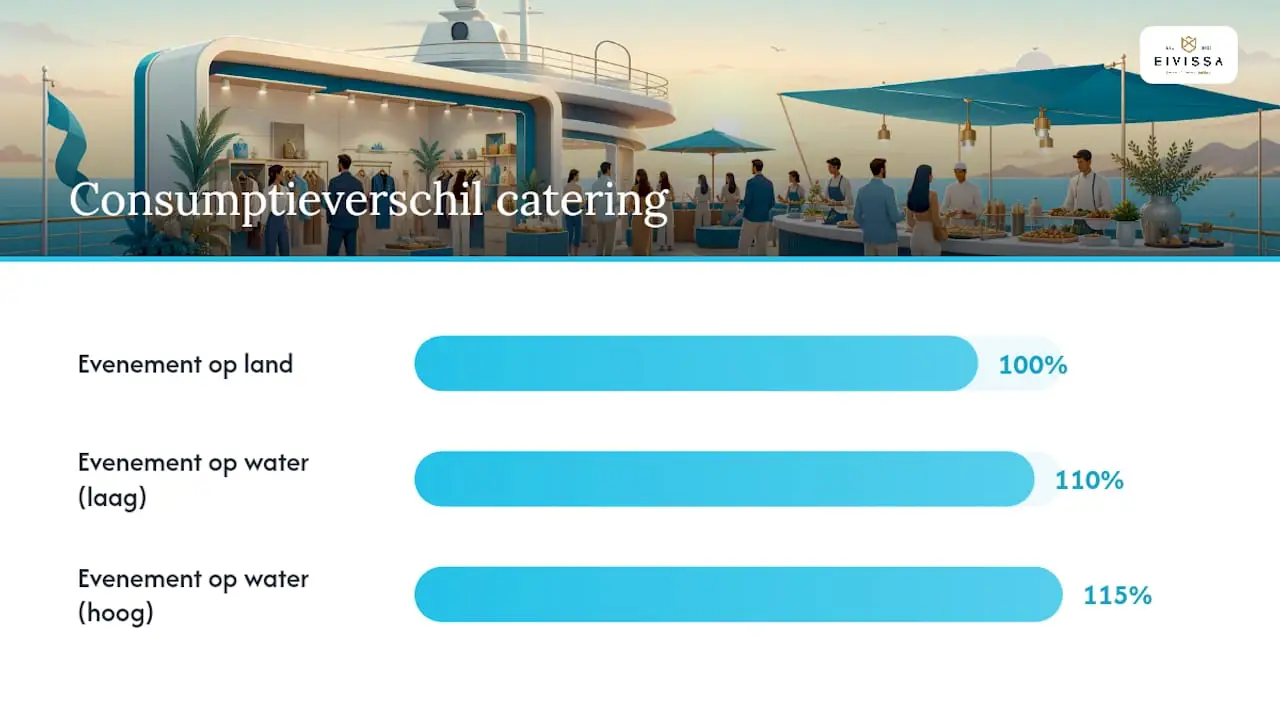
- Costs include ship hire, catering, technical support and logistics, with catering on water usually costing 10 to 15% more than on land.
- For a smooth experience, you need to use the expertise of a party like Eivissa-events, which handles everything from catering to permits, allowing you to focus on the content of the event.
Table of contents
- What exactly is a pop-up showroom on a ship?
- How do you plan a pop-up showroom on a ship step by step?
- What permits and logistical steps are necessary?
- How much does a pop-up showroom on a ship cost?
- How do you ensure a good guest experience and catering on board?
- Eivissa In practice: what can we learn from previous events on the water?
- When is a ship a smart choice for your showroom?
- How Eivissa-events organizes your pop-up showroom on the water
- Sources
- Frequently asked questions
What exactly is a pop-up showroom on a ship?
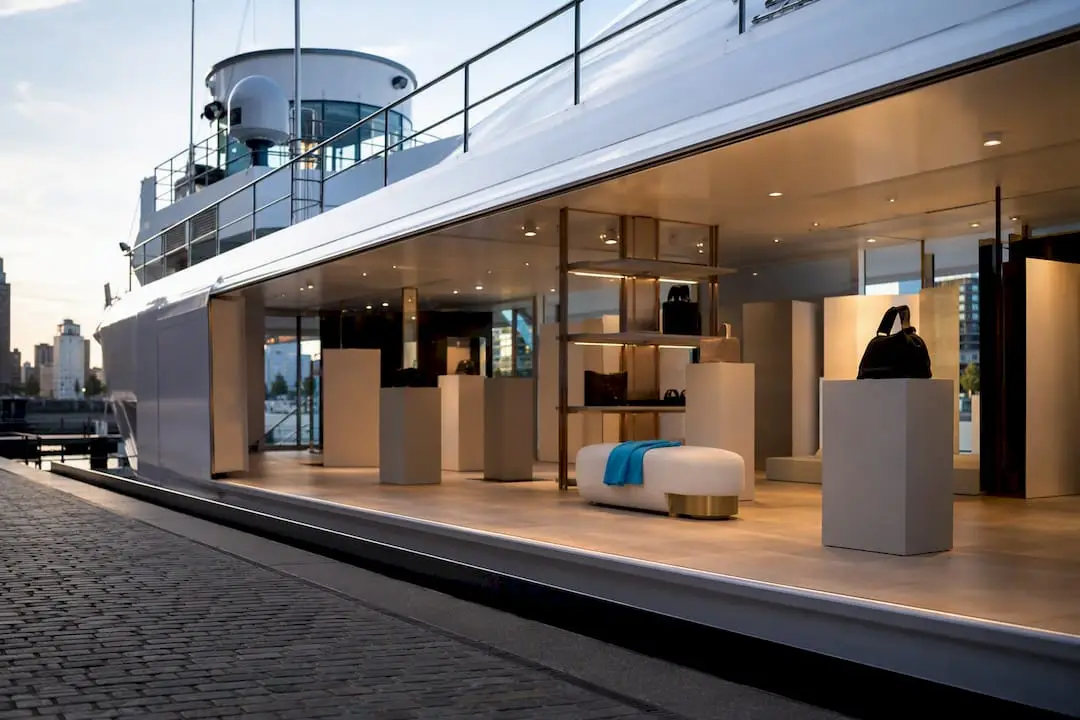
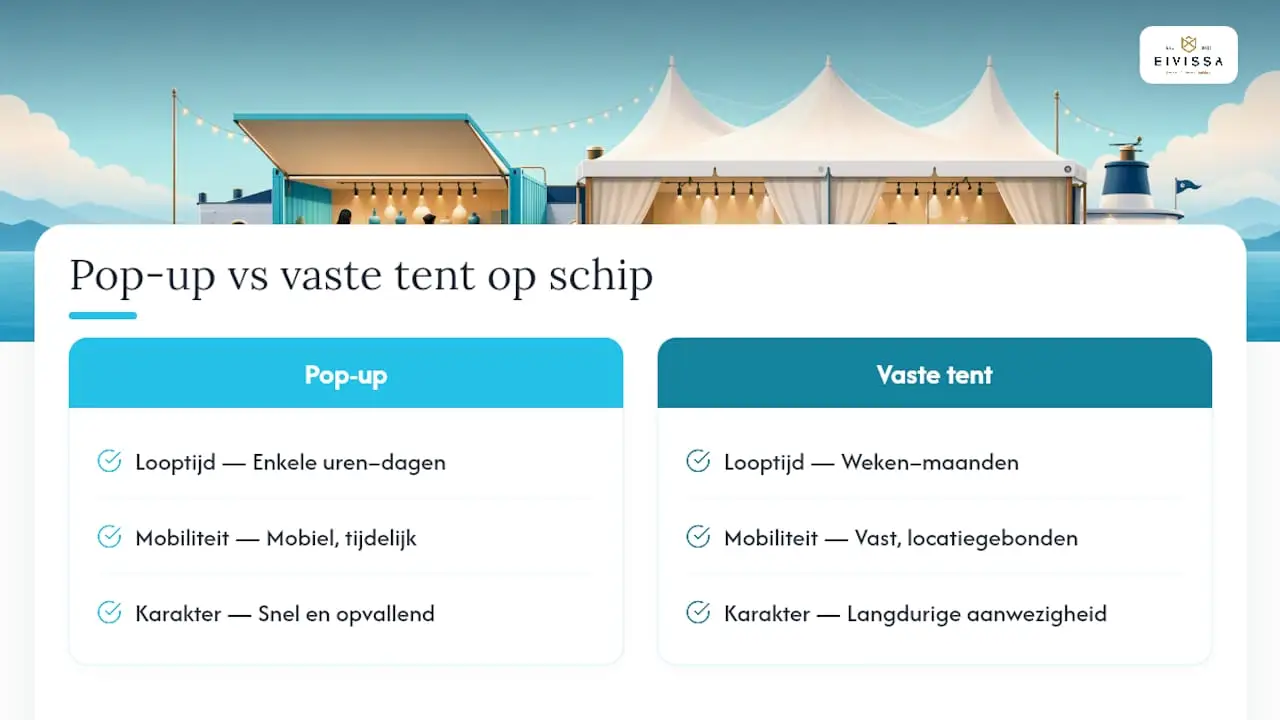
A pop-up showroom on a ship is a temporary brand presentation or retail experience that you build on board a sailing or docked vessel, usually for a period of a few hours to a few days. Unlike a permanent tent setup on a ship, which often stays in one location for weeks or months, a pop-up is about speed: short, striking, and gone before the novelty wears off. That makes it the ideal instrument for brands looking to make an impact without being tied to a single location for long.
Why choose a ship as a location?
A ship offers something that a warehouse or exhibition stand can never match: guests literally step out of their everyday environment. That change of scenery ensures that the message is better remembered, because participants are taken out of their habitual context and become more open to what you have to show, as it turns out. analyses of venues for events. Add to that the fact that a floating location generates more word-of-mouth advertising than a traditional indoor venue, and the investment in a pop-up showroom on a ship quickly justifies itself. the attention such events attract.
Advantages:
- Strong experience: the sailing itself works as an attraction and gives your concept a story.
- High media value: visitors share unique images automatically on social media.
- Mobility: you move the entire showroom to another city or port.
- Thematic flexibility: metaphors such as “setting a course” or “exploring new waters” seamlessly fit into product launches.
Restrictions:
- Capacity is limited; not every ship can accommodate large numbers of visitors.
- Accessibility requires attention; think of footbridges and people with disabilities.
- Weather and water levels can affect the planning.
Roadshows, premium product launches and VIP experiences benefit most from this approach, while large-scale public events with thousands of visitors often suit a fixed tent setup on land better.
How do you plan a pop-up showroom on a ship step by step?
Good planning starts not with the build itself, but with the concept. Without a clear goal, even the most beautiful ship showroom becomes an expensive experience without any results.
- Determine the concept and KPIs. Do you want to generate leads, increase brand awareness, or celebrate a product launch? Each goal requires a different invitation and guest list.
- Define your target audience. A pop-up for retailers requires a different atmosphere than a consumer-oriented shipping showroom.
- Work out the layout and routing. Think of the aisles, presentation areas and rest areas. Modern event vessels offer space for 75 to 1,200 guests, depending on the type of vessel and the layout you choose, as seen in practical examples of product launches on the water.
- Regulate the technical requirements. Screens, sound and lighting determine whether your message is seen or drowned out by the surroundings.
- Organize logistics and inventory. Limited storage space on board requires tight inventory planning.
- Plan for construction and demolition. For a medium-sized showroom, expect at least half a day of build time.
- Manage ticketing, security and guest management. Especially for closed-door events, a tight guest list is essential.
Pro tip: Book your ship at least eight to twelve weeks before the desired date. For larger events with custom-made decorations, three to four months of preparation time is more realistic, especially if you also want to arrange entertainment and technology.
What permits and logistical steps are necessary?
Mooring, safety and access control form the core of the logistical preparation, and these differ greatly from a showroom on land.
- Please contact the harbor master or berth manager in good time; not every pier is suitable or available on your desired date.
- Regulate the correct permits for events on the water; this varies per municipality and waterway.
- Prepare an evacuation plan and ensure fire safety measures that comply with ship regulations.
- Ensure medical accessibility, especially at events involving alcohol consumption or large groups of people.
- Work closely with the shipowner and the crew; they know the technical limits and safety regulations of the ship best.
Many Dutch ships can dock at urban ports, making it easy to reach a local audience without guests having to travel far. This is evident from examples of corporate parties in the Rotterdam port. Therefore, choose your docking location strategically, in consultation with the provider.
How much does a pop-up showroom on a ship cost?
The price of a ship as a venue depends on three main factors: rental, catering, and additional services. A basic rental often only covers the ship and crew, while an all-in approach includes technology, decoration, and staff. This last model significantly reduces the organizational burden, as you work with a single point of contact instead of coordinating with separate suppliers.
Expect these cost items:
- Basic charter or all-in package of the ship, depending on duration and capacity.
- Catering, which often stands higher on water than on land.
- Transport of materials and stand construction to the quay.
- Technical costs for AV, lighting and presentation equipment.
- Marketing costs and any permit fees with the municipality.
Statistics to remember: Consumption during events on the water is often 10 to 15% higher than at similar events on land, because the atmosphere and the movement on board make people more likely to try and drink alcohol, as shown by research. analyses of customized catering for moving events. Keep this in mind when setting your catering budget; otherwise, you may encounter an unpleasant surprise during the subsequent calculation.
How do you ensure a good guest experience and catering on board?
On a ship, you work with movement, limited space, and changing lines of sight, and that requires a different approach than a static room.
- Take advantage of the outdoor spaces and views for surprising discovery moments, such as a product launch at sunset on deck.
- Choose catering formats that suit the activity level: fingerfood, walking dinners and separate serving stations work better than a large sit-down dinner.
- Limit the table setup and work with small, efficient beverage stations to avoid waiting times.
- Present products in compact, eye-catching arrangements that leave room for flow.
- Put enough hospitality staff on board; guests on board appreciate personal attention, as is also shown by insights on customer service in the hospitality industry.
Pro tip: Plan a short performance or acoustic set during the drinks reception. This gives your showroom a rhythm and prevents guests from standing in one place for too long. Look for opportunities to consider the Performances that are Eivissa-events can take care of.
Eivissa In practice: what can we learn from previous events on the water?
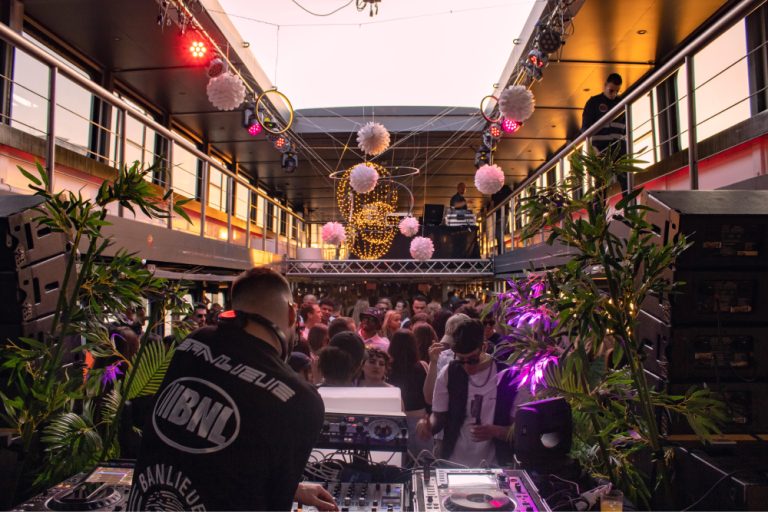
Various concepts have been organized on the water, ranging from music-oriented experiences to private networking events, with the same question always being at the center: how do you ensure that a brand or program stands out without the logistics taking over?
A common thread in such events is the all-inclusive model, where catering, technology, permits, and staffing are arranged as a single package, allowing the client to focus on the content of the event.
Key takeaways from these cases:
- Book well in advance: popular dates and ships fill up quickly.
- Limit your on-board stock to what you really need that day.
- Directly guide visitors to the most important points of interest using clear routing.
Are you considering a similar concept? A feasibility scan can quickly show which ship and approach would suit your objectives.
When is a ship a smart choice for your showroom?
A ship works excellently when your brand demands an experience: a launch with a select group, a roadshow that must impress in every city, or a VIP evening where exclusivity is key. If you’re unsure whether your target audience is large enough for an auditorium but too small for a trade show floor, then a ship is often the ideal middle ground.
If your event primarily targets mass audiences with thousands of visitors in a short timeframe, we recommend avoiding a ship; the capacity and docking logistics will work against you. In both cases, work closely with an experienced shipowner and crew. They know the technical limits of the vessel, which prevents costly surprises during construction.
— Eivissa
How Eivissa-events organizes your pop-up showroom on the water
While many locations only rent out a space, Eivissa-events takes care of the entire execution: catering, technology, entertainment, permits and staffing are all handled by a single point of contact. This saves you the hassle of switching between individual suppliers and the stress of last-minute last-minute arrangements just before opening.
Our experience with events like the Multinotes Showcase and various boat parties in Rotterdam shows that a well-prepared ship showroom doesn’t have to be complicated, as long as the right party handles the logistics. For brands considering a pop-up showroom on a ship in Utrecht, we are happy to explore the possibilities together. Event venue in Utrecht. Are you still unsure about the budget or the date? Request a free quote on our pricing page. renting of an event venue and we will get back to you within a day.
Sources
For this article, we consulted industry articles on floating event venues, catering practices on the water, and concrete examples of pop-up concepts on board, including the Tall Ships Races pop-up store and the premium shopping offerings of MSC Cruises.
- The benefits of a floating event venue! – Event Inspiration
- Word-of-mouth advertising: the forgotten power of marketing – Frankwatching
- Finger food catering (Kenjekom)
Frequently asked questions
How do I start a pop-up showroom on a ship?
Start with a clear concept and KPIs, then find a vessel that fits your capacity and budget, and arrange permits and catering well in advance. A provider with an all-in approach, such as Eivissa-events, takes many of these steps out of your hands.
How much does a pop-up showroom on a ship cost?
Always request a customized quote, because prices vary greatly depending on the ship and program.
What exactly is a pop-up showroom?
A pop-up showroom is a temporary brand presentation that you set up for a short period to showcase products or services in a striking way. On a ship, that concept takes on an extra dimension because the environment itself already forms part of the experience.
How long does a pop-up showroom usually stay on a ship?
Most pop-up showrooms on a ship last from a few hours to a few days, depending on the purpose and target audience. For a roadshow across multiple cities, you often opt for shorter stops per location, while a single launch sometimes spans an entire weekend.