
Setting goals
Organizing a business event without a purpose is a waste of time. You invest a lot of time, energy, and money in making a successful event happen. Therefore, you want to determine in advance what the goal of your business event is. What does it actually bring to the organization?
What is the goal of your event?
First, you want to make the goals concrete. A goal like, "I want my company to become more famous," is too vague. Do you want to meet new customers? Build networking contacts? Make it measurable. A concrete goal could be: 10 new potential customers with whom you can schedule a networking or acquisition conversation. You can further concretize this. You want 3 new customers who will generate €30,000 in revenue next year.
What message do you want to convey to guests?
Next, you decide what you want your guests to say during your business event. What is the most important message? How do you ensure that every guest at the event hears this message? Do you want (potential) customers to learn about a new product? Or do you want to inform them about a change in the market?
The target group
Who is the target audience? When determining the message, it is important to remember who you are going to tell it to. For whom is your event valuable? We are quick to think primarily about what the event should bring us, but what does your event bring a visitor? This increases the chance of visitors.

Budgeting event
A realistic budget is key to organizing a successful event. Avoid high unexpected costs and get an overview of what you need for the event. Of course, the event location is often the most important factor. But there are also a whole lot of other factors to consider. Below you will find some tips to help you understand the budget you need.
Setting a budget for a business event
Overview of supplies
Make a list of everything you need for the event. From catering and location to equipment, preparation, and promotional materials. What are you bringing with you and who will help you with that? Then determine a realistic budget.
Event revenues
What do you want the event to generate? Make a realistic estimate of the revenues. Do you sell tickets, have sponsors or contributions from partners? And what do new customers bring in that you generate at the event? You have direct revenues but also deferred revenues.
Unexpected costs
Budget for unforeseen expenses. Plan in advance what you might spend more money on. This way you’ll be prepared for unexpected situations.
Budget monitoring
Monitor your budget. During the preparation and organization, you will already incur costs. Keep a record of what you spend in a document so that you don’t lose track of it.
Get help
Are you organizing an event for the first time? Don’t do everything yourself. For example, ask for help from the event location and learn how to organize an event professionally.

Promotion event
Promoting and attracting visitors is crucial when organizing a business event. Without good promotion, even the best organized event will remain unvisited. Reach out to the target audience you have determined when creating the objectives. Answer the following questions:
- Who is the target group?
- Why does someone visit our event? What does the event bring to the visitor?
- How do I reach or invite the target audience?
How do you reach your target audience?
Get your social media channels up and running. Promote your event by posting on Instagram, Facebook, or LinkedIn, for example. You can also create a press release on your Google business account. Additionally, you can send an email to your CRM database. The final and most important tip is to collaborate with other companies or organizations. When you work with partners, you also leverage the entire network of your partners. In that way, you can greatly expand your reach.
Organization and logistics
You want your event to run smoothly and for guests to have a good time. Are you organizing a business event? Make sure you know in advance what you need for the number of visitors during the event. Think about food and drink. What kind of drinks do you want to serve? Do you want a walking dinner or canapés during the event?
Having a division of roles and a clear division of tasks for everyone involved in the event is important to ensure everything runs smoothly. Create a schedule and a program so everyone knows what needs to be done when. Additionally, you can communicate the schedule with the guests.
When organizing a business event, you also need people for the catering, technical support for things like presentations or performances, and an efficient system for registering guests. Finally, you want the event venue to be set up and recognizable with your organization’s branding.
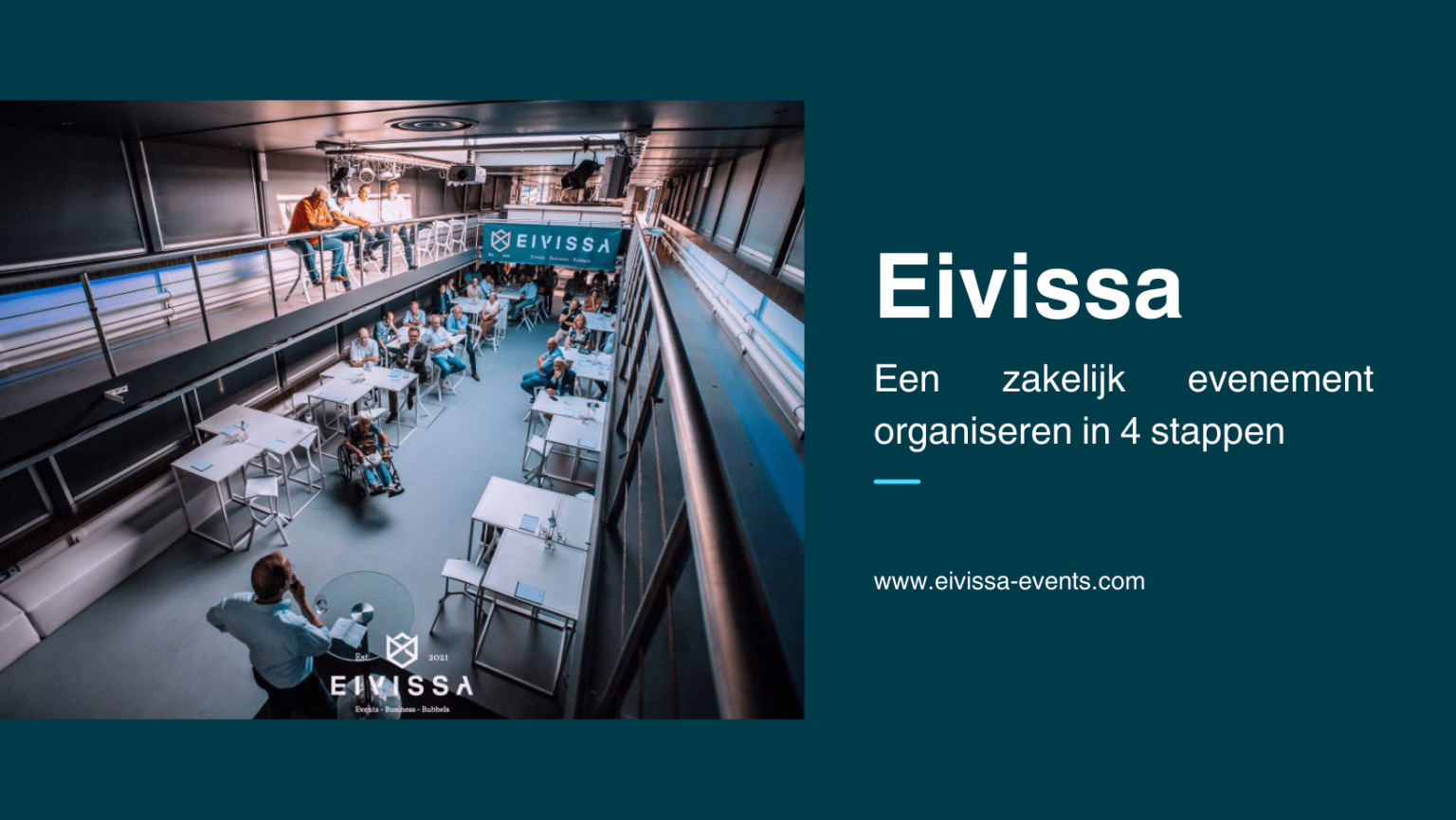
At our own event location, the Eivissa, we can, where necessary, also take on the organization and logistics for a large part. So you can be sure that there will be a professional event on the day itself. If you want to learn more about how to choose the right event location and what types of locations there are, read our next article. mail.
Conclusion
Organizing a business event can be very rewarding. During the planning process, you want to be able to focus on the purpose of the event. Whether that’s attracting new customers or launching a new product. That’s what matters to you and the guests.
So, do you want to organize a successful business event? Then follow these 4 steps. Whether it’s a networking event, product launch, conference, brand event or corporate party, organizing an event requires a lot of planning, attention and energy.
Curious about our event venue? Check out the Eivissa EventsOr follow us on Instagram!