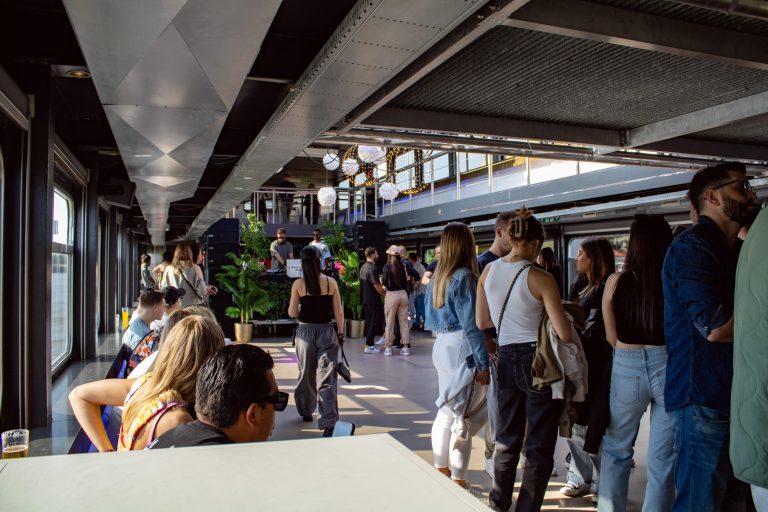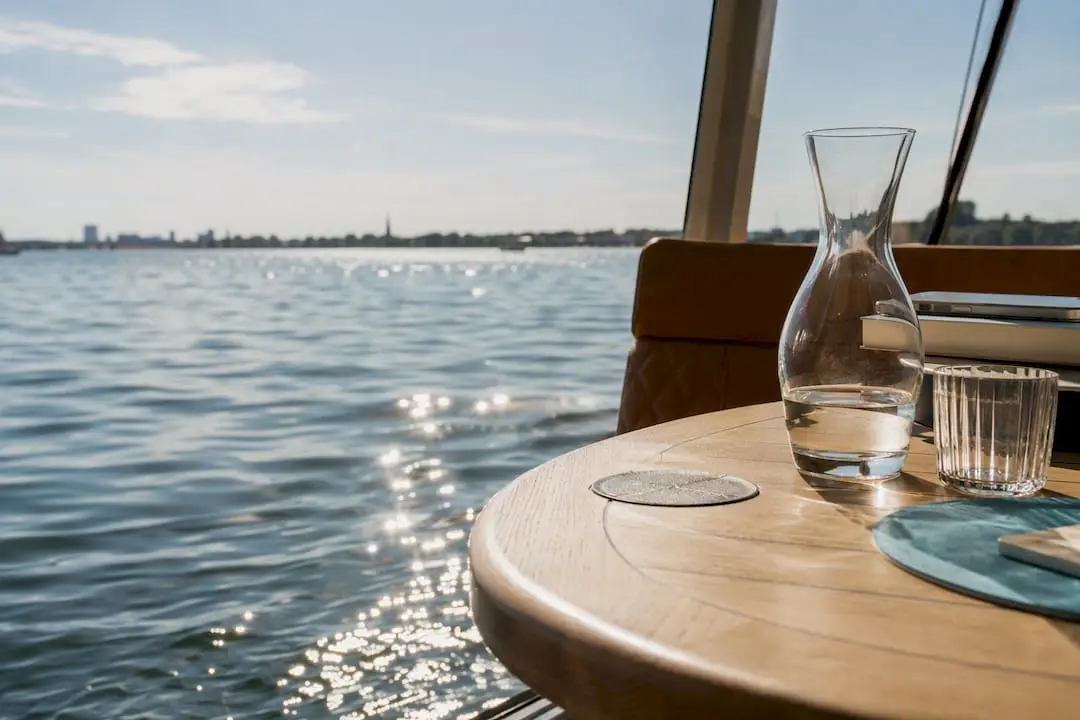
Gathering in the water strengthens creativity and focus and is excellent for brainstorming sessions, difficult conversations, and all-inclusive company events. For a board meeting with sharp decision-making, a stuck brainstorming session, or a client presentation that needs to impress, a boat is often a better choice than a standard conference room. The featured-snippet idea of peace and a changing environment that increase cognitive flexibility is exactly why this works: people think differently once the fixed office walls fall away.
For those who are unsure: it is less suitable for formal legal negotiations where documentation and punctuality weigh more than atmosphere, and for small sessions where the cost of a boat is not commensurate with the result.
Meeting on the water is a strong choice if you want to:
- Stalled brainstorming revived
- Conducting sensitive conversations in a neutral, relaxed setting
- Combining a team day or hybrid session with an experience
- Impress customers or stakeholders with your organization
Read on for the evidence, the practical logistics, and a concrete checklist, or request an offer directly for your meeting on the water.
Key insights
Meeting on the water increases creativity and reduces tension during difficult conversations, provided that technology, capacity, and weather protocols are well arranged in advance.
| Point | Details |
|---|---|
| Suitable meetings | Board meetings, brainstorms, customer presentations and team days benefit the most from a water location. |
| Arrange the technicalities first | Always ask about power, Wi‑Fi capacity, and a backup plan for audio and video. |
| Rain is not a dealbreaker | Electric, heated salon boats make business cruising possible all year round. |
| Ask sharp questions beforehand | Check the cancellation policy, exact price coverage and maximum group size when booking. |
| Eivissa for larger events | Starting with around one hundred people, Eivissa-events offers all-inclusive services ranging from boat charters to catering and technical support. |
Why water-based meetings work: evidence and practical observations
Peace and a changing environment influence how people think. As the familiar meeting room is replaced by open water and a slowly changing horizon, the way a group deals with a problem also shifts. Meeting on the water gives a meeting an extra dimension: it increases creativity and flexibility and makes difficult conversations less fraught, precisely because the setting has no association with previous conflicts or routine.
What the practice shows: Operators of salon boats report that groups that get stuck in the office often reach a decision more quickly on board. The isolation on the water acts as a kind of informal reset. There is no phone ringing in the hallway, no colleague coming in for a quick question.
Concrete benefits that planners see from a session on the water:
- Less distraction: no hallway traffic, no other meetings entering from the outside.
- Better group dynamics: an informal setting lowers the threshold for naming critical points.
- Higher involvementParticipants experience the session as particularly interesting, which increases the attention during the program.
- Natural breaksThe view and movement give you the space to reset yourself for a moment.
Also thematic lists about locations by the water Naming rest as the most important reason why companies choose a boat instead of a room. This aligns with what operators have been seeing for some time: a change of environment is not a gimmick, but a functional part of the program.
Which types of meetings are best suited for a boat?
Not every meeting benefits equally from sailing. Some formats have even been created for that, while others are better suited to being held on land.
- Board meetings and strategy sessions. Suitable for mid-size groups with a session duration of several hours and a high level of service: private space, discrete catering and complete privacy.
- Creative brainstorms. It works well for smaller to medium-sized groups, usually for a half-day to a full day. The informal setting actually encourages the kind of thinking that gets stuck in the office.
- Customer presentations and product launches. Suitable for medium to large groups, with an emphasis on presentation techniques and making an impression. Short and powerful works best here.
- Team days and hybrid sessions. Suitable for larger groups, often a full day where meetings are combined with team building activities or a drink afterwards.
Meetings on water are less suitable for sessions that require many separate work areas and quiet rooms, such as long-term individual assessment discussions, or for groups of fewer than six people where the cost of a boat does not outweigh the result.
Technology, capacity and safety: what you need to arrange
A meeting on the water requires slightly different preparation than a meeting in an office. The basics must be in place before the atmosphere can do its job.
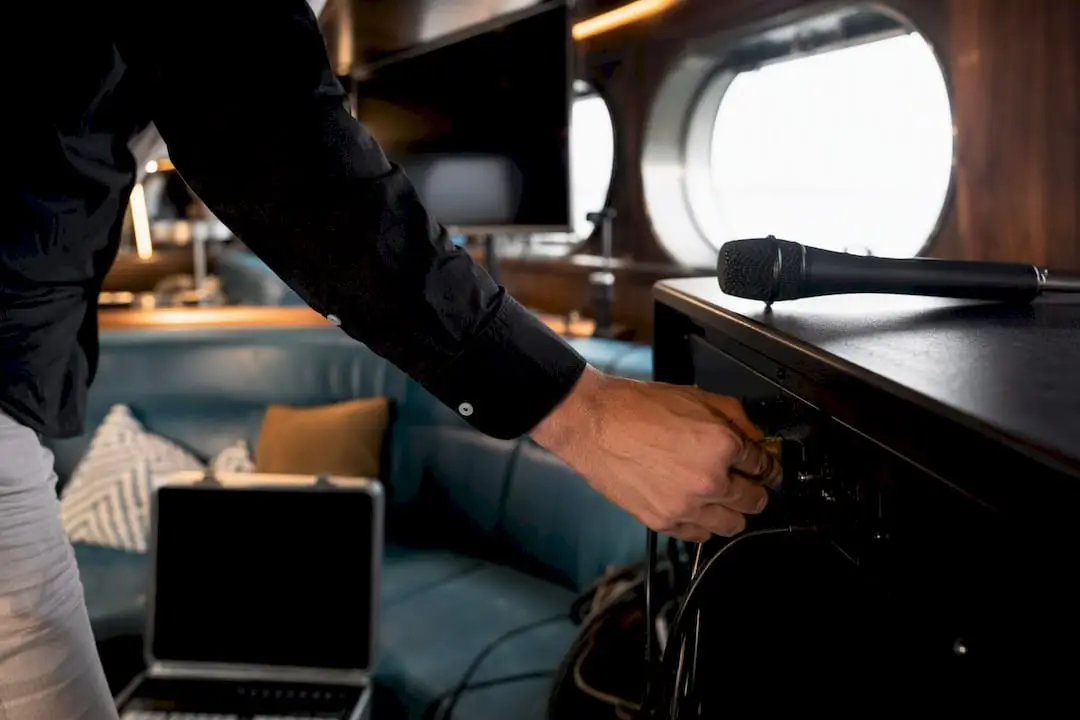
Technology and presentation possibilities. Always ask about power supply, Wi-Fi capacity for the number of participants, a projector or screen, and a backup plan for sound. Sailboats that sail commercially They often offer fully equipped presentation technology, precisely because they have been adapted specifically for this type of meeting.
Space and layout. Consider seating arrangements for the main session, any breakout corners for smaller groups, and a buffet setup that doesn't get in the way during the presentation.
Accessibility and transportation. Choose a pickup location that is easily accessible by public transport or car, and ask in advance about facilities for disabled guests. A map tool such as Mapbox helps to check the route and accessibility in advance for larger groups.
Safety and weather. Modern event vessels are often quiet and heated, making it possible to sail all year round, even in rain or cold weather. Always ask about the weather protocol: during storms, a sailing route is sometimes replaced by a static berth.
Costs and coverage. Prices vary greatly depending on the provider, group size, and duration. An all-inclusive arrangement usually covers the boat, catering, and basic equipment; additional technology or entertainment is often added on separately.
Step-by-step: this is how to organize a meeting on the water
A good session on the water starts well before boarding and does not end once everyone is back on shore.
Before the meeting:
- Determine the goal and build the agenda around it tightly.
- Prepare the list of participants and confirm attendance well in advance.
- Document the technical and catering requirements in writing with the provider.
- Arrange transportation to the drop-off location and plan for a time buffer.
During the meeting:
- Provide a brief welcome and introductory briefing on layout and emergency procedures.
- Assign one contact person on board for logistical questions.
- Keep the time under strict control, especially around breaks: on the water, the clock slips away easily.
- Build at least one outdoor break so that the view can really do its job.
After the meeting:
- Collect short feedback from participants about the content and location.
- Check the invoice against the coverage agreed upon in advance.
- Ask permission to use photos or video if you want to use them internally later.
Always ask a provider before booking: the weather protocol, the exact price coverage, the maximum group size per room, and the availability of technical support during the program.
What this means for planners who want to do things differently
The conventional assumption is that a special location is primarily just a nice extra, something for the photos and the atmosphere. This underestimates what really happens on board. The real gain lies in the behavior of the group: people who get stuck in old patterns in the office are more likely to have an awkward conversation on the water or to dare to come up with an unconventional idea.
What we often see go wrong: planners book a special location, but then treat the program as if they were still in the conference room. Tight blocks of fifty minutes, no space for the view to work. That’s a waste. The environment only does its job when the program allows for it, with breaks outside and an opening that doesn’t immediately jump to sheet one.
What we would pay attention to as a top priority: don’t choose the most beautiful boat, but the provider that takes full care of logistics and technology. A great location with a malfunctioning projector or unclear emergency procedure undermines exactly the trust you want to build.
— Eivissa
Eivissa The all-inclusive solution for meetings on the water
Organizing a meeting on the water usually means switching between a boat rental company, a caterer, and a technical agency. Eivissa-events makes that unnecessary: one point of contact manages the boat, catering, presentation technology, entertainment, and decor in one process, so you can focus solely on the content of your meeting.
Eivissa It is the logical choice for larger groups when a team day, congress or product launch is too big for a regular salon boat, but the atmosphere on the water must still be preserved. Customers especially appreciate the smooth organization: no separate suppliers competing with each other, but one party that keeps the whole day running, from reception to the final drinks reception. Those who want to combine the session with a business cocktail or want to grow into a larger one congress, At Eivissa-events, the same level of convenience is found.
Do you want to know what a meeting on the water can mean for your organization? Take a look at the possibilities and Request a quote for your event venue.